English
 Chinese
Scan QRCode

From the performance of the auto market one week after New Year's Day, the car purchase subsidy policy has too much impact on the auto market. We all know that in recent years, car purchase subsidy policy has always been an important thrust to promote the rapid development of Chinese automobile market, especially the new energy vehicle market. These policies have effectively reduced the purchase cost of consumers and stimulated the market demand, from the early purchase tax reduction and exemption, direct subsidies for vehicle purchase, to the regional consumption coupons launched by local governments, rewards for trade-in and other diversified incentives. Especially in the field of new energy vehicles, the continuous implementation of subsidy policies not only promotes the rapid growth of sales, but also accelerates the pace of technology iteration and infrastructure construction, making China a leader in the global new energy vehicle market.
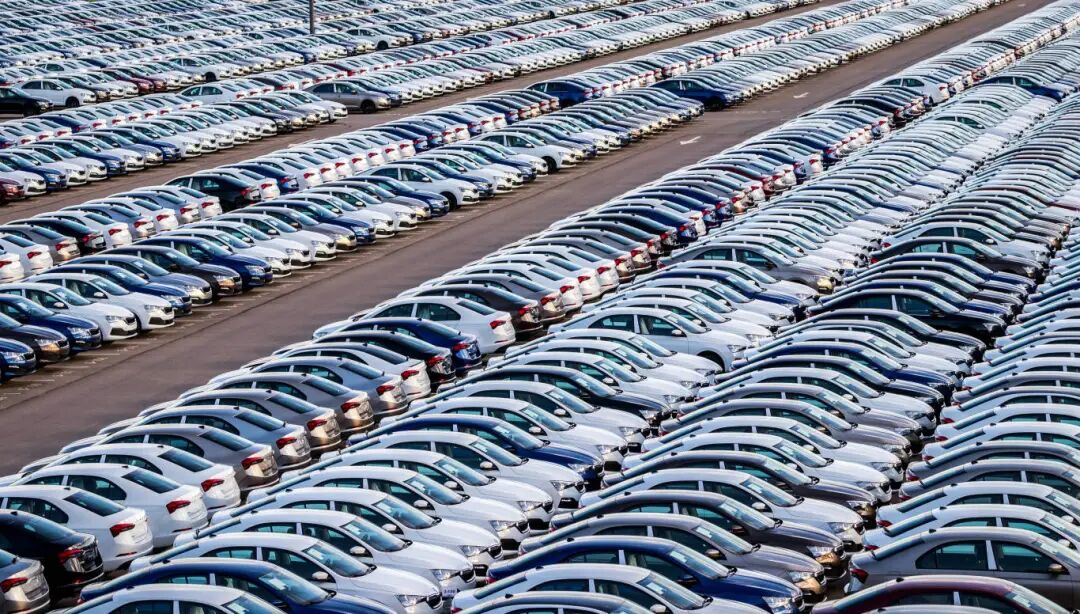
However, when the wheel of time comes to 2026, an important policy node will be gradually reached - the official end of the tax exemption policy for the purchase of new energy vehicles implemented for many years, and this change has an immediate impact on the car market. The data shows that, from January 1 to 11, 2026, the retail sales of passenger vehicles in the national market are only 328000 units, a sharp decrease of 32% year-on-year, and a sharp decrease of 42% year-on-year. Among them, the retail sales of new energy vehicles were 117000, a year-on-year drop of 38% and a year-on-year drop of 67%. This set of data is like a pot of cold water on the car market in early 2026, showing the direct impact of policy recession on the consumer end.g. The market seems to be using the most intuitive numbers to tell us that when subsidies recede, consumers' buying decisions become more prudent and short-term market pressure is inevitable. Car buyers are one-third fewer after New Year's Day, and the Chinese car market experiences an unexpected, yet unexpected, cold weather after the New Year's Day holiday in 2026. The data shows that, from January 1 to 11, the total number of passenger vehicle retail sales in China was just 328000, which not only fell by nearly one third year-on-year, but also sharply decreased by over 40% year-on-year. Such decline is rare in the data of the same period in recent years, highlighting the immediate impact of the purchase tax policy adjustment on the market. More interesting is the performance of the new energy vehicle market.
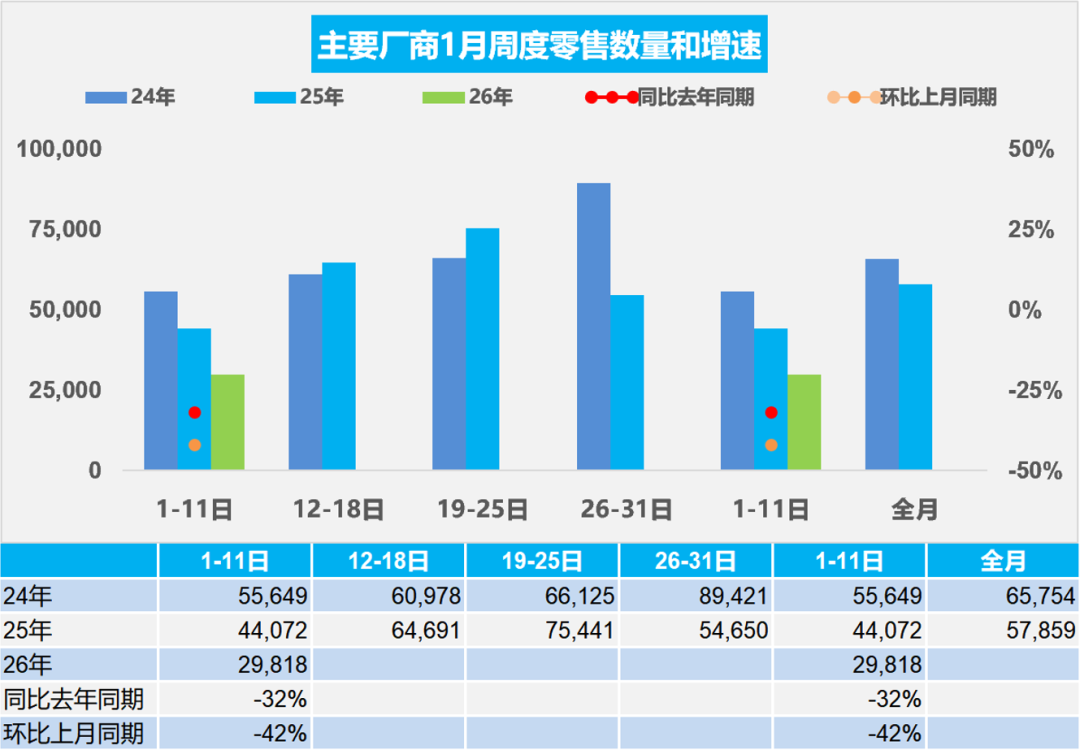
In the 11 days, the retail volume of new-energy vehicles was just 117000 units, down 38% year-on-year, and a remarkable 67% year-on-year drop. What is reflected by this data is that the new-energy vehicle market, which was previously driven by policies, is particularly sensitive to consumers' response to the direct rise in purchase costs. The penetration rate of new energy vehicles also fell back to 35.5% from the high level in the same period last year, showing the relative resilience of traditional fuel vehicles in the policy change period. Seen from the market segments, multiple dimensions show different degrees of contraction. First, from the price range analysis, the middle and low-end markets are most affected. These consumers are most sensitive to price changes, and the exit of the purchase tax policy directly increases their purchase costs, causing many potential car buyers to wait or postpone their purchase plans. From the model category, the decline of pure electric vehicles is larger than that of plug-in hybrid vehicles, which may be related to the higher dependence on policies of the former. Moreover, from the perspective of geographical distribution, the sales decline of first-tier and second-tier cities with high penetration rate of new energy vehicles is more obvious. Consumers in these regions tend to accept new energy vehicles earlier, but they are more likely to adjust their purchase plans due to policy changes. The feedback from the market terminal shows that after New Year's Day, the customer flow of many auto dealer stores is significantly reduced, the transaction period is extended, and consumers' decision-making is more cautious. One dealer in Shanghai said: "It was a small peak before the Spring Festival after New Year's Day in previous years, but this year it was obviously felt that the number of customers was less. Many customers who were interested in the past asked whether there was a new subsidy policy, or made it clear that the decision would be made after the local subsidy rules came out.”
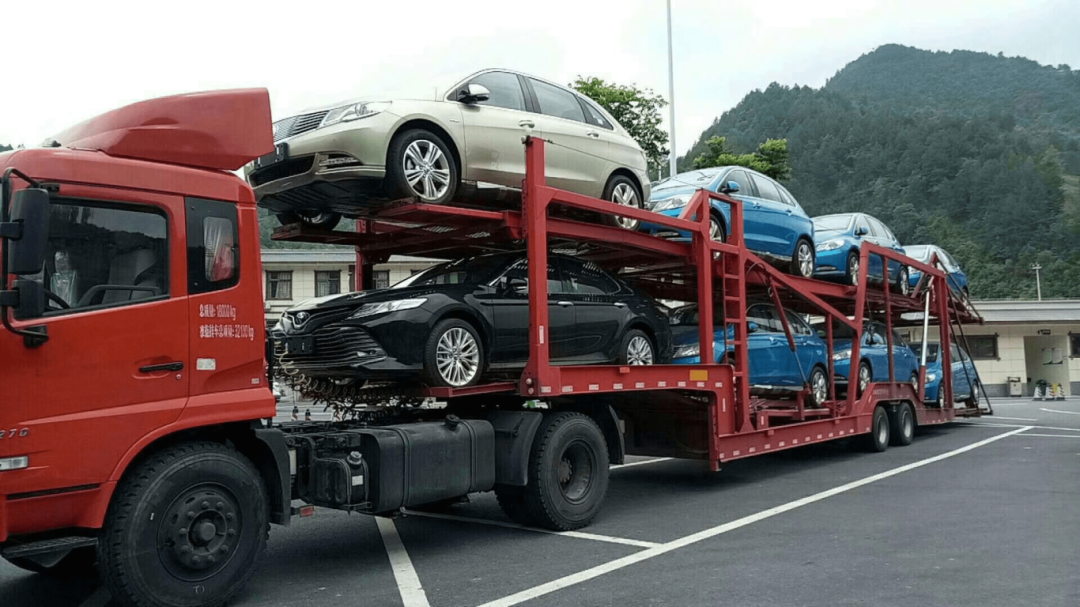
In the eyes of insiders, this round of sales decline is the result of multiple factors. In addition to the direct reason for the end of the purchase tax exemption policy, the impulse effect at the end of last year released some demand in advance. Many automakers launched various promotions at the end of 2025, pushing some consumers who were originally planning to buy cars in early 2026 to complete the transaction in advance.g. In addition, the prudent expectation of the economic environment, fluctuating consumer confidence and the approaching of the Spring Festival also exerted pressure on the auto market at the beginning of the year. It is worth noting that, despite poor retail data, some experts have noted that some companies still have considerable orders on hold. This suggests that market demand has not disappeared completely, but is more converted to a wait-and-see attitude. This phenomenon is especially obvious in the new energy vehicle field, and many potential buyers are waiting for the clarification of the local subsidy policies, or the automobile enterprises are expected to launch new preferential policies to offset the cost increase caused by the increase of purchase tax.
A new round of subsidies is coming, and the market is expected to recover
In the face of the market pain caused by the purchase tax refund, the national and local governments responded quickly, and a series of new automobile consumption incentive measures have been or will be introduced, which injected new vitality to the automobile market in 2026. At the national level, the new-round vehicle trade-in and consumption subsidy policies have been clearly defined. In accordance with the latest policies and rules, in terms of scrapping old vehicles and purchasing new ones, consumers who purchase new energy passenger vehicles can get a subsidy of 12% of the new vehicle price, with a maximum of 20000 yuan; In terms of transferring old vehicles to purchase new vehicles, the subsidy ratio of new energy passenger vehicles is 8% of the price of new vehicles, with a maximum of 15000 yuan. Compared with the previous subsidy measures, this policy has been adjusted, but it still provides substantial car purchase support for consumers, which is expected to partially offset the impact of changes in purchase tax policies.
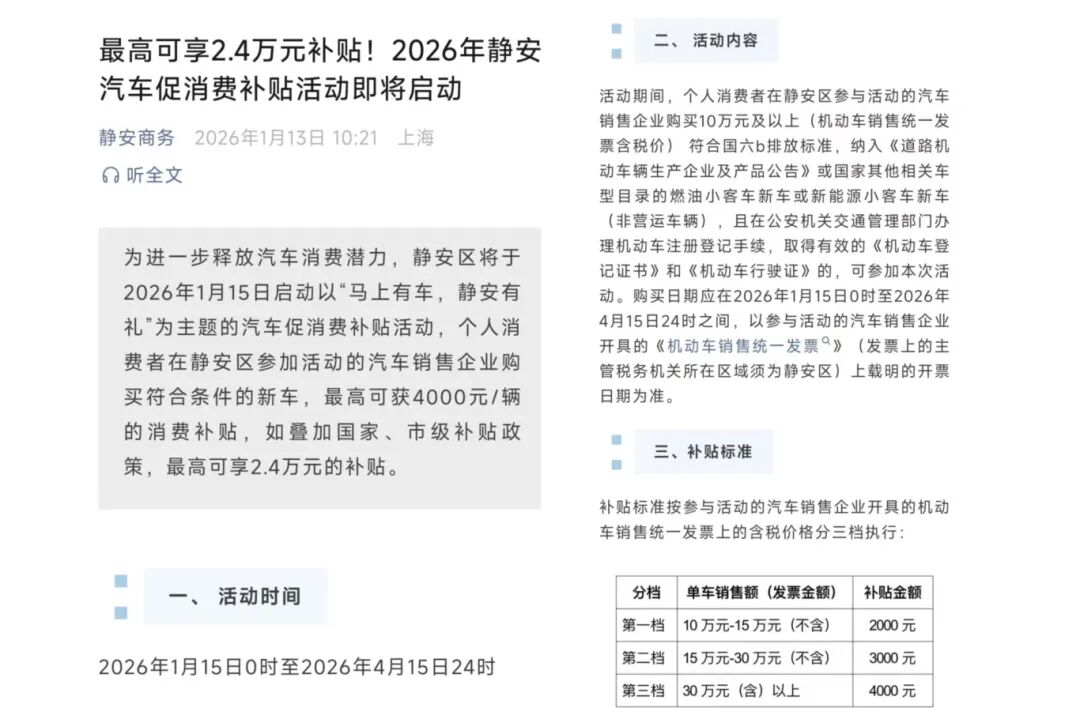
At the same time, local governments have taken action to launch various featured automobile consumption subsidy policies, forming a good situation of coordinated development of central and local policies. For example, Shandong and Jinan recently invested a special fund of 50 million yuan to launch the automobile consumption subsidy activity of "Wanma Benteng Spring City Purchase", and the combination of "insurance subsidy+consumption certificate" was adopted to directly subsidize the car buyers; Jing'an District of Shanghai will launch the activity of "Have a Car Now and Have Gift in Jing'an" on January 15 to promote the consumption of cars. It can obtain the consumption subsidy of 4000 yuan/vehicle at most. If the subsidy policy is superimposed on the national and municipal subsidy policies, it can enjoy the subsidy of 24000 yuan at most. The timely launch of these local subsidy policies not only provides consumers with direct car purchase preferential policies, but also sends a clear signal of the government's continuous support for car consumption to the market. In particular, the policy design in Jing'an District of Shanghai focuses on the superposition effect of subsidies at all levels, so as to minimize the purchase cost of consumers. This kind of policy innovation is expected to be referenced and promoted in other regions. In addition to direct financial subsidies, the seasonality before the Spring Festival will also provide strong support for the auto market.
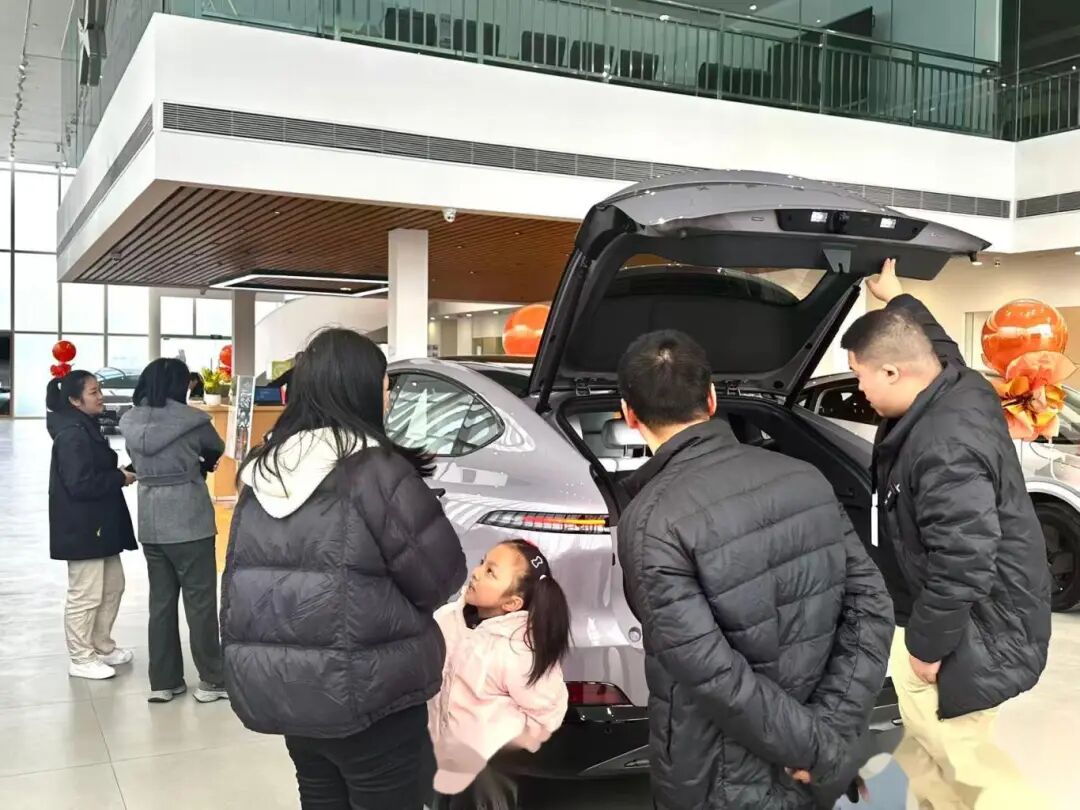
Spring Festival, as the most important traditional festival in China, is often the peak period of household consumption, with strong demand for car purchase and exchange. In addition, the early Spring Festival this year and the relatively limited sales window in January may also promote some consumers to speed up their purchase decisions and avoid logistics delay and delivery difficulties during the Spring Festival. Automobile dealers usually launch various promotion activities during this period, which form a combined force with the government subsidies to further stimulate the purchase demand. Based on this, many optimistic insiders believe that the market is expected to gradually improve with the comprehensive launch of the subsidy rules and subsidy channels in various regions. Because the opening ceremony in January each year is the direction of joint efforts of local governments and automakers for many years, combined with the influence of the Spring Festival in February, a certain amount of wholesale transfer will be formed in January; In addition, 2026 is the first year of the "10th Five-Year Plan" and also the year of automobile consumption. Time factor is particularly important. It is estimated that the year-on-year sales in January will achieve slight growth. To sum up, although the auto market is subject to short-term fluctuation caused by policy adjustment in the beginning of 2026, the timely launch of a new round of subsidy policies and the arrival of the peak consumption season before the Spring Festival are expected to jointly promote the gradual recovery of the market.
For auto enterprises, how to adjust product strategies and dissemination in the policy transition period and balance costs and competitiveness will be the key to address current market challenges. For consumers, the superposition of multiple subsidies may create a good time to buy a car, especially in the field of new energy vehicles, the trend of technological progress and cost reduction is still ongoing, and the long-term good fundamentals have not changed. The opening of Chinese auto market in 2026 may be bumpy, but the quick response of policies and the self-regulation ability of the market give us reason to believe that this is only a temporary adjustment, not a reversal of trend. With the implementation of various incentives and gradual recovery of consumer confidence, China's auto market is expected to see a wave of recovery around the Spring Festival.
AMS2024 Exhibition Guide | Comprehensive Exhibition Guide, Don't Miss the Exciting Events Online and Offline
Notice on Holding the Rui'an Promotion Conference for the 2025 China (Rui'an) International Automobile and Motorcycle Parts Exhibition
On September 5th, we invite you to join us at the Wenzhou Auto Parts Exhibition on a journey to trace the origin of the Auto Parts City, as per the invitation from the purchaser!
Hot Booking | AAPEX 2024- Professional Exhibition Channel for Entering the North American Auto Parts Market
The wind is just right, Qianchuan Hui! Looking forward to working with you at the 2024 Wenzhou Auto Parts Exhibition and composing a new chapter!
Live up to Shaohua | Wenzhou Auto Parts Exhibition, these wonderful moments are worth remembering!
Free support line!
Email Support!
Working Days/Hours!



Copyright © 2018, PKT Auto Parts All Rights Reserved
浙ICP备18033565号-1
 浙公网安备33038102332475号