English
 Chinese
Scan QRCode

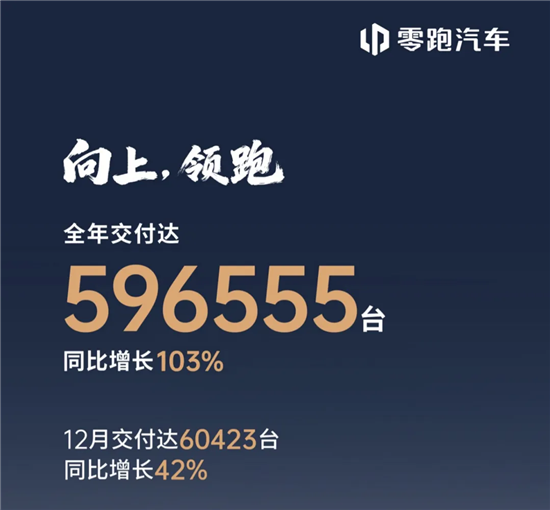
When the Chinese new energy vehicle market bids farewell to its wild growth and enters the "knockout stage", the changes in the industry landscape exceed everyone's expectations. The new power landscape once dominated by "Wei Xiaoli" was broken by the collective breakthrough of "Zero Boundary Rice" at the end of 2025, and Zero Run Automobile is undoubtedly the most eye-catching "dark horse" - delivering nearly 600000 vehicles throughout the year, a year-on-year growth of over 100%. It not only topped the sales chart of new forces, but also became one of the few enterprises in the industry to achieve consecutive quarterly profits.
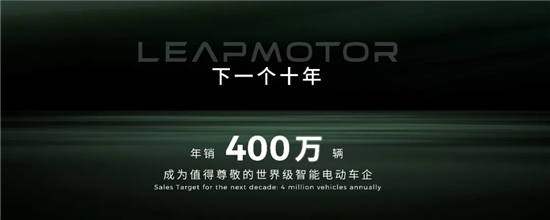

Standing at the milestone of its tenth anniversary, Zero Run has set a strategic goal of "selling 4 million vehicles annually in the next ten years and breaking into the top ten globally", and its plan to achieve one million sales by 2026 has brought it into the spotlight. How did this car company, which had been jogging for a long time, achieve a comeback in just a few years? Can the competitive barriers it constructs support the ambition of globalization? And in order to achieve the goal of selling 4 million vehicles annually in the next decade, what more does Zero Run Motors have to pay?
Competitive barriers constructed through comprehensive research and development
The outbreak of Zero Run is not accidental, but a concentrated release of ten years of effort - based on comprehensive self research and supported by ecological collaboration, ultimately forming a development path of "technology inclusiveness+efficiency victory". This path not only enables it to stand firm in the industry price war, but also becomes the core logic of its profit and scale growth.
Global self-developed is the most distinctive label of Zero Run, and it is also its core advantage that distinguishes it from most new forces. As early as its establishment in 2015, Zero Run avoided the traditional outsourcing model of "setting specifications and conducting inspections" for car companies and chose to independently develop and manufacture the entire chain. This "heavy investment" strategy was initially questioned, but as the scale expanded, its advantages gradually emerged: currently, Zero Run has established 17 major component factories, with a sharing rate of up to 88% for key components such as core electronic and electrical architecture, battery packs, and electric drive systems, covering 65% of the cost of new energy core technologies. In contrast, the component sharing rate of "Weixiaoli" is lower than that of "Zero Run". Ideal Automobile has achieved a certain sharing rate through the "L series nesting doll" (industry data shows over 70%), but only limited to models on the same platform (such as L7/L8/L9). Some parts of the pure electric i series cannot be shared. And shared components are concentrated in the body structure, interior components, etc., while batteries, chips, etc. cannot be further reduced through sharing due to complete outsourcing. The platform sharing rate of Xiaopeng Motors has not been publicly disclosed, but from its model matrix (such as G3i, P7i, G6, etc.), there are significant differences in chassis and electric drive systems between different series. After Xiaopeng switches to SEPA2.0 rocking architecture, the sharing rate will increase to a certain extent; NIO achieved a component reuse rate of 78% in 2025, a significant increase from 60% in 2024. This growth is mainly due to the collaboration and platform based production of multiple brands (such as NIO, Ledao, and Firefly). For example, the shared seat frame platform reduces the BOM cost of bicycles by 10%, and the cost of intelligent hardware interfaces is reduced from 2000 yuan/vehicle to 1000 yuan/vehicle after unification. This deep self production not only significantly reduces the complexity of the supply chain, but also allows for technological iteration and cost control to be in one's own hands. For example, its 100000 level model A10 can be equipped with laser radar and advanced assisted driving, which were originally used for 200000 level models, thanks to the cost advantage brought by self-developed technology. If it relies on external purchases, the cost of a single laser radar will increase by thousands of yuan. However, Zero Run has achieved "technology decentralization" through self-developed technology, accurately targeting the needs of young first-time buyers for "high cost-effectiveness+intelligence". According to insiders of Zero Run, the blind ordering data of this model is "very good" and may become a potential explosive point for sales growth in 2026.
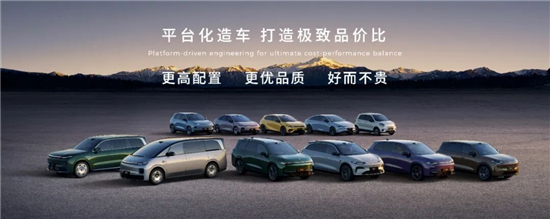
On the basis of independent research, Zero Run further amplifies its efficiency advantages through platform based car manufacturing. At present, it covers all models with only two core electronic architectures, and three standard battery cells are compatible with all products, with a platformization rate far exceeding the industry average. In 2025, the main models of Zero Run will be concentrated in the mainstream market with a price range of 100000 to 250000 yuan. The monthly delivery of C10 will exceed 20000 units, and the monthly sales of B01 and B10 series will exceed 25000 units. C11, C16 and other models will maintain monthly sales of over 10000 units. This trend of "full product line blooming" is a direct result of platformization and cost pricing strategy. If global self research is the "internal strength" of Zero Run, then multi-party cooperation is its "external strength" for accelerating expansion. The founder of Zero Run Technology, Zhu Jiangming, led the construction of the "equity triangle" pattern, providing a guarantee for the scale development of Zero Run. After ten years of deep cultivation, Zero Run has bid farewell to the growth label of new forces, and its goal for the next ten years is to become a world-class car company with annual sales of over 4 million vehicles. Based on the current annual sales volume of 596500 vehicles in 2025, its compound annual growth rate will reach over 20%. In the short term, the demand for 1 million vehicles in 2026 is expected to increase by 67.6% year-on-year, which requires Zero Run to accurately implement product deployment (planning 12 new cars), channel expansion (targeting over 2500 global outlets), and supply chain guarantee (battery stocking at 1.2-1.3 times the scale of 1 million vehicles); In the medium to long term, with the increase of industry penetration rate, market competition will shift from "incremental game" to "stock competition". The acceleration of traditional car companies' electrification transformation and the intensification of the head effect of new forces may squeeze the growth space of Zero Run.
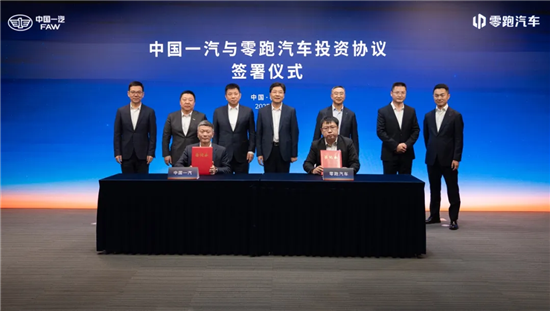
In order to achieve this goal, Zero Run will establish a stable equity triangle of "founding team+central enterprise+international giant" by 2025. Recently, its strategic cooperation with China FAW has become a benchmark for central enterprises to invest in new forces for the first time. FAW's manufacturing experience, policy resources, and Zero Run's three electric technology complement each other, and the two sides have already implemented substantial cooperation in the fields of powertrain and core component procurement; The deep binding with Stellantis has opened up a global channel for Zero Run. Zhu Jiangming believes that this ecological synergy is not simply the accumulation of resources, but rather the complementary advantages of technology, production capacity, and policy resources, allowing Zero Run to avoid detours in the global layout.
The growth test under the million sales target
By 2026, achieving a sales volume of 1 million vehicles and a net profit of 5 billion yuan is a crucial step for Zero Run Automobile to transition from a "new force dark horse" to a "leading player in the industry". On the surface, it has built a production capacity buffer zone of 1.46-15.1 million vehicles through the three major bases of "Jinhua+Hangzhou+Hefei", planned to launch 12 new cars covering the full price range from 100000 to 500000, and anchored its overseas sales target of 100000 vehicles to form growth. The supporting system of "production capacity product channel" seems to be complete, but in the context of industry competition entering the deep water zone, Zero Run still needs to deal with multiple tests such as high-end breakthrough, intelligent shortcomings, and industry competition. At the same time, issues such as profitability quality, cost resilience, cash flow security, and overseas investment returns have become even more difficult to overcome than sales scale - especially in the context of low profit base in 2025, narrowing cost reduction space, and short-term debt pressure, the financial system of Zero Run will face enormous pressure tests.
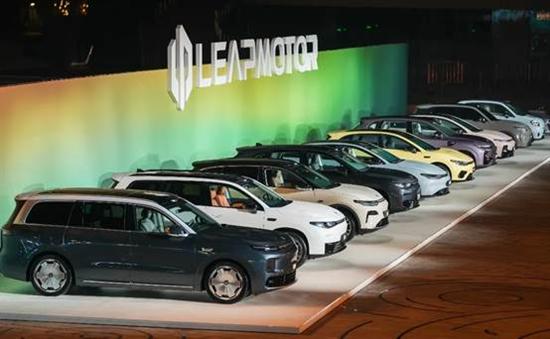
The bottleneck of brand awareness in the high-end market is the primary challenge faced by Zero Run. Focusing on the mass market for a long time has enabled Zero Run to form a brand label of "high cost-effectiveness", but it also poses a test of user trust in the process of high-end development. Although the D series has caught up with top luxury brands in terms of technical configuration, competition in the high-end market is not only about "hardware competition", but also about the emotional value conveyed by the brand - Ideal Automobile occupies the minds of family users with its precise positioning as a "dad car", NIO creates a high-end community through battery swapping services and user operations, while Zero Run founder Zhu Jiangming clearly stated that "Zero Run will not actively provide emotional value to users". This engineer style pragmatic positioning may cause it to miss out on some consumers who value experience in the competition with competitors. In 2026, the D series needs to find differentiation advantages among models such as the Ideal L9 and the WENJIE M9. How to transform "technological advantages" into "brand recognition" will directly affect the success or failure of its high-end transformation, and also determine whether Zero Run can break through the "gross profit ceiling". The "latecomer disadvantage" of intelligent investment is a shortcoming that Zero Run urgently needs to fill, and Zhu Jiangming has already identified the path and determination to catch up. Compared to companies such as Xiaopeng and Huawei that have laid out intelligent driving early on, Zero Run's large-scale investment in the field of intelligence began in 2024. An insider from Zero Run stated, "We did start a bit later in the field of intelligence, but there is no absolute first mover advantage in the field of intelligent driving. The key lies in the correctness of our technological roadmap and investment intensity. With the imminent landing of L3 level autonomous driving, the mileage of urban road takeover by Zero Run has reached over 100 kilometers, and the technical roadmap is becoming increasingly clear. However, there is still a gap between Zero Run and leading enterprises in algorithm iteration and data accumulation of advanced intelligent driving. In addition, the mass production and implementation of technologies such as the end side large model cockpit and VLA autonomous driving still need to address issues such as chip supply and scene adaptation. How to achieve rapid catch-up while ensuring technical stability will be an important challenge for the Zero Run technology team.
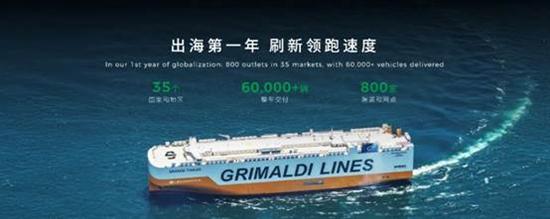
The intensification of industry competition and the uncertainty of globalization have further increased the difficulty of achieving the zero million target. From the perspective of the domestic market, the competition within "Hongling Mi" has entered a white hot stage: Hongmeng Zhixing's target for 2026 is 1.2 million vehicles, Xiaomi Auto continues to attract traffic with its "human car home ecosystem", and if Zero Run wants to maintain its first tier position, it needs to continue to lead in product iteration speed and channel efficiency; The electrification transformation of traditional car companies brings more pressure, and companies such as BYD and Geely continue to explore prices with their scale advantages. The internal competition in the mainstream market of 100000 to 250000 yuan will further compress profit margins. The challenge of Zero Run has just begun: how to maintain profitability in scale expansion, how to reshape brand awareness in high-end, how to cope with geopolitical risks in globalization. The answers to these questions will determine whether it can truly enter the ranks of "world-class car companies".
AMS2024 Exhibition Guide | Comprehensive Exhibition Guide, Don't Miss the Exciting Events Online and Offline
Notice on Holding the Rui'an Promotion Conference for the 2025 China (Rui'an) International Automobile and Motorcycle Parts Exhibition
On September 5th, we invite you to join us at the Wenzhou Auto Parts Exhibition on a journey to trace the origin of the Auto Parts City, as per the invitation from the purchaser!
Hot Booking | AAPEX 2024- Professional Exhibition Channel for Entering the North American Auto Parts Market
The wind is just right, Qianchuan Hui! Looking forward to working with you at the 2024 Wenzhou Auto Parts Exhibition and composing a new chapter!
Live up to Shaohua | Wenzhou Auto Parts Exhibition, these wonderful moments are worth remembering!
Free support line!
Email Support!
Working Days/Hours!



Copyright © 2018, PKT Auto Parts All Rights Reserved
浙ICP备18033565号-1
 浙公网安备33038102332475号