English
 Chinese
Scan QRCode

According to data from the European Automobile Manufacturers Association, the proportion of hybrid vehicles in the EU market has reached 34.6% in the first 10 months of 2025; At the same time, the market share of Chinese brands in the European pure electric vehicle (BEV) market has risen to 11%, and the pace of market penetration continues to accelerate. In this context, German Chancellor Merkel, together with multiple EU member states such as Italy, is pressuring Brussels to either relax the ban on fuel consumption or watch the automotive industry collapse. On December 16, 2025 local time, the European Commission officially announced the withdrawal of its policy to completely ban the sale of new fuel vehicles from 2035, causing a global shock in the automotive industry. The outside world generally believes that this move is a significant concession by the European Union in green policies, and is seen as a direct response to the rapid rise of Chinese car brands in the European market.
Policy shift: from "single fuel ban" to "technology neutrality"

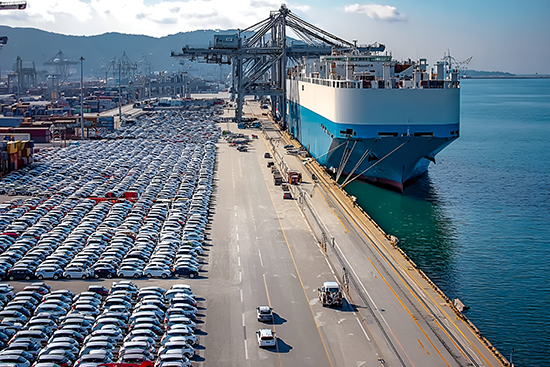
The 2035 ban on fuel vehicles was originally a core pillar of the EU's "Fit for 55" emissions reduction plan, setting a clear decarbonization timetable for the European automotive industry. Nowadays, there has been a significant loosening of EU policies, with substantial adjustments made in both the selection of technological paths and the setting of emission reduction targets. The most significant change is to adjust the target of 100% zero emissions by 2035 to a 90% reduction in emissions. The remaining 10% emission gap can be offset through various means, such as using low-carbon steel produced by the European Union, electronic fuels (e-fuels), or non food biofuels. This means that fuel engine technology has not been completely banned, but has gained compliance space to continue to exist. On the technological path, the new plan breaks the previous single insistence on the pure electric route and establishes a "technology neutral" framework. Plug in hybrid, range extender, hybrid electric vehicles, and internal combustion engine vehicles that meet specific low-carbon fuel standards can all continue to be sold.
Technical Path: Compliance and Diversified Value of Hybrid Power
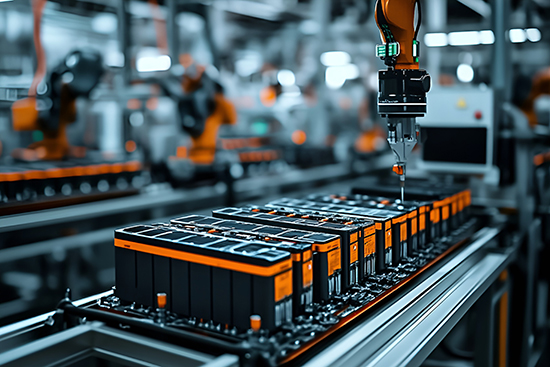
According to the new EU policy, various hybrid technologies have been explicitly included in the compliance development path. These technological paths each have their own characteristics in terms of emission reduction efficiency and user experience: Range Extended Electric Vehicles (REEVs): mainly driven by electricity, equipped with small fuel engines as "power banks", and the engine does not directly drive the wheels. Daily commuting scenarios can achieve pure electric driving, meeting the demand for low-carbon travel; When traveling long distances, there is no need to worry about mileage anxiety, and it is suitable for all scenarios of travel. Hybrid Electric Vehicle (HEV): Equipped with both a fuel engine and an electric motor, the two work together. Vehicles mainly rely on electric drive to achieve energy conservation and consumption reduction under low-speed driving conditions; In scenarios that require high power output, such as accelerating overtaking or driving at high speeds, the fuel engine automatically intervenes to ensure power performance. Plug in hybrid electric vehicle (PHEV): combines the advantages of pure electric vehicles and traditional hybrid electric vehicles. It can be charged through an external power source and has a long pure electric range; Automatically switch to hybrid mode after the battery is depleted. It is worth noting that although EU policies have reserved space for the development of the above-mentioned technological paths, William Totz, the executive director of the environmental organization "Transport and Environment" (T&E), warned that "relying on internal combustion engines will not make European car manufacturers great again." The reason for the policy reversal is the dual pressure of industry and market demand
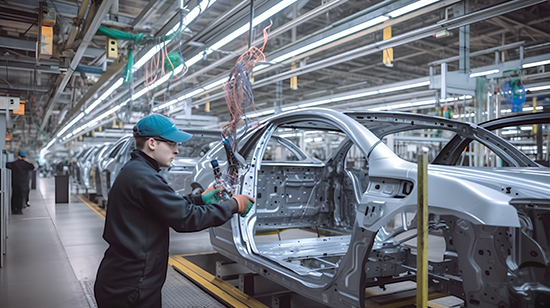
The EU policy adjustment this time is not accidental, and the core incentive is that the European automotive industry is facing multiple realistic pressures, which are no longer able to support the original aggressive decarbonization route. Market demand differentiation and weakness. In the first 10 months of 2025, the number of new car registrations in the European Union increased slightly by 1.4% year-on-year, but the power structure did not tilt towards pure electric direction. There is a gap between the actual market performance and compliance targets. To meet the compliance requirement of reducing carbon emissions by 15% from 2021 to 2025, the market share of pure electric vehicles needs to reach around 25%, while the actual share is only 16.4%, indicating a significant gap. Infrastructure construction is seriously lagging behind. Data shows that the installation speed of charging stations in the European Union is only one sixth of the demand, which means that millions of potential consumers give up purchasing due to inconvenient charging every year, fundamentally limiting the market expansion space for pure electric vehicles. The pressure of competition in China is intensifying. In the first half of 2025, Chinese brands will account for 11% of the European pure electric vehicle market, with sales skyrocketing by 89% year-on-year. The price advantage of Chinese brands is obvious, for example, the starting price of BYD Tang EV in Europe is 22% cheaper than the same level Volkswagen ID.6. Industrial employment is facing a threat. According to data from the German Association of Automobile Manufacturers, if the original plan to completely ban fuel consumption by 2035 is implemented, at least 270000 automotive related jobs in Germany will face the risk of disappearing.
Changes in Going Global: Opportunities and Challenges for Chinese Automotive Companies
The impact of EU policy adjustments on Chinese automobile export enterprises is multidimensional, bringing both new market opportunities and ongoing challenges. Chinese car companies' technological reserves in the field of hybrid power are becoming a new competitive advantage. Unlike European car companies that are still in the throes of transformation, leading Chinese car companies such as BYD have made long-term investments and industrial layouts in hybrid technology. This' latecomer advantage 'enables it to quickly respond to policy changes and demand adjustments in the EU market, seizing market opportunities. However, at the same time, in the face of strong market attacks from Chinese car companies, trade barriers and technological barriers at the EU level are gradually being constructed. Firstly, the EU's requirements for low-carbon supply chains are becoming increasingly stringent. According to the new proposal, if small electric vehicles complete the entire vehicle and battery assembly process within the European Union, car companies can receive 1.3 times the basic carbon emission points for every vehicle sold. This policy orientation clearly encourages car companies to produce locally in the EU rather than directly importing complete vehicles. At the same time, the Carbon Border Adjustment Mechanism (CBAM) will impose carbon tariffs on imported raw materials from 2026, which may increase the cost of steel products exported from China to Europe by 4% to 6%, further compressing the profit margins of enterprises. Currently, Chinese brands face dual challenges in the European market, including insufficient brand premium and weak service networks. Although some Chinese brand models have advantages in price and technology, in order to truly integrate into the European market, it is still necessary to increase investment in brand building, after-sales service, and localized operations.
The way to break through: multidimensional strategic transformation of Chinese car companies
Faced with changes in the EU policy environment and market competition landscape, Chinese automobile export enterprises need to adjust their strategies from multiple dimensions to maintain and enhance their competitiveness in the European market. Diversified technological layout has become an urgent task. While continuing to consolidate the technological advantages of pure electric vehicles, Chinese car companies need to strengthen their research and development of hybrid technology and product line layout. After the adjustment of EU policies, the hybrid technology path has been officially included in the compliance framework, providing Chinese car companies with richer market entry points. Localized production and supply chain construction are key to avoiding trade barriers. The "super points" reward mechanism in the new EU policy is clearly linked to "Made in the EU". Chinese car companies should accelerate their localization production layout in Europe, such as BYD investing 2 billion euros to build a battery factory in Hungary. Green supply chain management capability will become a new competitive advantage. With the implementation of green trade barriers such as CBAM, carbon emission data management and low-carbon supply chain construction will become one of the core competitiveness of Chinese car companies. Enterprises need to incorporate carbon management into their overall strategy, enhance supply chain transparency and sustainability. The enhancement of brand value is the cornerstone of long-term development. Chinese car companies should gradually transition from "cost-effectiveness output" to "technology and brand value output". By strengthening the construction of localized service system, participating in European automotive culture activities and sports event sponsorship, etc., we aim to enhance the brand's awareness and reputation in the European market. The EU market's policy bias towards small pure electric vehicles has become apparent. Renault 5, Volkswagen ID. Polo and other models have been included in the newly added M1E independent regulatory category, and will enjoy more relaxed technical requirements and "super points" rewards. Faced with market changes, Chinese car brands have taken the lead in adjusting their overseas strategy. NIO is building Europe's largest battery swapping station factory in Hungary and plans to build 200 battery swapping stations in Europe by the end of 2025. With the deepening of policy games, the global automotive industry landscape is being reshaped. Enterprises that can quickly adapt to rule changes, maintain leadership in diverse technological paths, and deeply cultivate the market through localized operations will occupy a favorable position in this transformation.
AMS2024 Exhibition Guide | Comprehensive Exhibition Guide, Don't Miss the Exciting Events Online and Offline
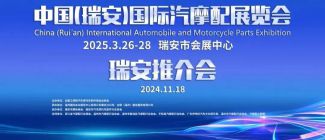
Notice on Holding the Rui'an Promotion Conference for the 2025 China (Rui'an) International Automobile and Motorcycle Parts Exhibition
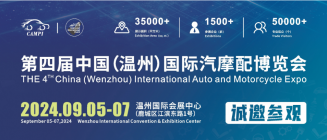
On September 5th, we invite you to join us at the Wenzhou Auto Parts Exhibition on a journey to trace the origin of the Auto Parts City, as per the invitation from the purchaser!
Hot Booking | AAPEX 2024- Professional Exhibition Channel for Entering the North American Auto Parts Market
The wind is just right, Qianchuan Hui! Looking forward to working with you at the 2024 Wenzhou Auto Parts Exhibition and composing a new chapter!
Live up to Shaohua | Wenzhou Auto Parts Exhibition, these wonderful moments are worth remembering!
Free support line!
Email Support!
Working Days/Hours!



Copyright © 2018, PKT Auto Parts All Rights Reserved
浙ICP备18033565号-1
 浙公网安备33038102332475号